Showing posts with label NORA. Show all posts

Friday, April 17, 2015

Debugging – The Importance of DIY

As with any game in production, we at GravTech Games have encountered our share of bugs. Some going from having the wrong value being plugged in all the way to needing to look into the Unreal Engine 4 source code to find the one thing that messes up the code and keeps us from compiling. And like any other game these can take time to fix, it’s unavoidable. However the real topic I want to touch on is the importance of fixing your own bugs and issues before asking for outside help, even if you aren’t the one who made the bug. Doing so can make you into a stronger programmer, less dependent on others, but also (and this part is probably most important) the issue becomes less of a time sink for the team. While this is a good practice in any work environment it is especially important while working on NORA because our team works remotely.

In most normal work environments I could lean over and talk to a fellow teammate about an issue I’m finding with their code and get a more immediate answer to the problem. However, when working with different people all living in different places and even time zones this becomes difficult. Instead of being able to lean over to my teammate I instead have to write a message with the problem in Skype, and then wait for what can be hours and hope I get an answer to the question, which might not even happen. Even worse, this can take up the other person’s time when helping. One person spending 1 hour on a bug is 1 hour of dev time spent. But two people both spending 1 hour on a bug is 2 hours of dev time spent. This slows down the productivity of the team and the turnover rate for getting tasks done. This is where fixing your own issues comes into play; with it our productivity can increase by not wasting time waiting on an answer. With that in mind here is my debugging process for when these situations arise:

Talk it through:


Talk it out with yourself, try to envision the problem, know what’s going on, and then find where it’s messing up. Sometimes just reviewing the code you have written can give you the “Oh that’s what it is, of course” moment and then you move on. When you explain something to someone you go in detail about whatever you’re explaining and sometimes when programming going into every little detail can show you what the issue is.

Knowing how to read code:

Credit

This goes beyond being able to read your own code but just to all code in general. Imagine a scenario where you write a function and it works fine for every application you have for it. Now imagine that it’s months later and you’re finding issues with it and you’ve completely forgotten what it is that you did in the function and said “My code is perfect, there’s no need to comment it”. Knowing how to read code comes in here to help even with your own code, because I for one will admit that I have had this happen to me and I was very thankfully I could read the very poorly written code so I could see the issue. This also works well when debugging other people’s code because other people think differently and therefore code differently, so being able to understand what they’re doing is the first step to finding the issue.

Don’t be afraid to learn:
Credit
Knowing what the issue is and knowing how to fix it are two different things. And with a new engine like the Unreal Engine 4 there are bound to be issues with implementing your own functionality. Thankfully for us there is a plethora of forums with people attempting similar things to us who have found different solutions. Several months ago we were having an issue with the project only building from Visual Studio on certain machines. The issue being that to build the project the project was looking for a build.bat file in the install folder for the engine and we had it installed in different locations. Since the engine is still moderately new and not many people have worked on big team projects with it while using source control there wasn’t an easy solution to this problem. However after about an hour of searching on the internet for people who had similar problems I finally found one person who said he fixed the issue by using environment variables to store the file path for the install folder. From there I had to learn how to use environment variables in Visual Studio for how we needed it and then the problem was fixed. This would have been very problematic to the team had it remained an issue.

Ask for help:

Credit
Yes, I started this as a do it yourself, but some problems you just can’t solve alone. However this should be the second to last thing you do. And if you’ve done your research, you’ve stared at a screen for hours and still nothing then sometimes a fresh pair of eyes is just what you need. You need a different perspective and someone to talk things through with. Even if it takes up their time as well as yours if it’s a problem you can’t fix on your own then it’s a problem you can’t fix on your own and you need help. And if after getting help and you still haven’t made progress on the issue then you might have to go to the last resort, rewriting the code. I had an issue on a past project where the entire collision system was broken and the person who wrote it was no longer on the team. We spent a full day looking at his uncommented and very confusing code and it got us nowhere. We eventually had to rewrite the entire system to fix everything.


In the end problem solving is a time consuming and not-always-fun mini-game we have to play. But if you can learn how to play it correctly then it becomes less of a hassle and it makes you all the stronger for doing it.

Wednesday, April 1, 2015

Maintaining Motivation

Today I thought it would be an interesting discussion to write up about one of the most important skills in life. Motivation is one of the most valuable tools in an artists, or anyone’s, toolbox, and yet, so few people seem to truly have the drive to work at it.
Credit
I know what you are thinking, the hand raising in the back of the classroom “uh, Patch…motivation is a noun describing a reason to do things, not a skill which normally is described in verbs, such as drawing.” On this, I choose to strongly disagree. Acquiring motivation doesn't happen overnight, it doesn't come out of nowhere. I liken it to when you are drawing out in public someplace “trendy,” Starbucks or something, or people view your work, and they are like “O-M-G, you are so-o-o-o talented, I wish I could draw! Less-than-three.” Every artist hears that and they appreciate the sentiment, the compliment, the kind words, and uplifting intention, but really “talent” didn't get the person where they are. Hard work did. Countless hours of hard work, and to simplify it down to a quality that people colloquially akin to someone being born with such as “talent” is to diminish all of that effort. Motivation is very similar. You aren't just born with it and never again have another chance to roll the d20 and get a critical hit from your previous critical fail.

“Okay Fine, it’s a “skill,” but if it’s a skill, how does one get better at it?”

Credit
I am glad you asked voice in my head, thank you for not speaking a language I don’t know this time!   Well, to be someone that people refer to as “motivated,” I would say you need to develop a habitual work ethic.  If you truly are going from ground zero, due to depression, or years of laziness, then feel free to start small.  Maybe just tell yourself that every single day, before you leave your bedroom, you will draw a circle.  EVERY DAY. Something that small.  Or you could just take a deep breath and be like, “Thou shalt not wallow in bed for an hour deciding to get up on days after a really good party when I have the day off and I have plenty of stuff to do, but I want another 5 minutes of sleep, that never ends up another 5 minutes of sleep, and I know that but the covers are so warm, and just 5 more minutes, okay time to get up, just 5 more minutes.” Then realize you wasted 3 hours of your day, and did nothing you wanted to do. Start on working on these things, these little (or sometimes bigger…) pushes to get out of bed. Breaking these little lazy habits. Then grow from there. Truly kick yourself if you fall back into these negative space bad habits.

Like all skills in life that a person wants to practice, you need to objectively look at your behaviors, and decide which qualities to keep, and which to throw away. Do you have bad line quality? Then you need to restudy it, redraw it, restudy it, correct it, redraw it, practice, practice. Critically assess your mistakes. Are you unmotivated? Critically assess the areas that time is being thrown away from doing things you “want to do, but never get around to” like that book, or that drawing, that’s been on the backburner for 2 years while you tell people about it, but it’s so hard to pin point down that key plot point that’s missing while you are playing League of Legends.  Which brings up another, very quick topic.  Plan your day. Play league, great, it is fun. But plan the time around it. If you want 2 hours of League time, and you need to practice drawing, and you have a day job, how can you make that all work? I would say proper planning of your day is definitely part of developing motivation.

Credit
“Alright, I’m convinced, but what does that have to do with art and vidya garmes…”

Seriously, if that was your thoughts, I will find you. I will FIND YOU, and I will paint yellow daisies and ice cream and unicorn farts all over your super edgey grim dark depression piece that represents the void in your soul since he walked out of your life. Being self-motivated is a HUGE part of art, and if its even possible, it’s an even bigger part of indie game design, when you have no boss staring you in the eyes every day, no “beatchu” sticks to keep you in line, and all long term glimpses of glory, but you have deadlines to hit.  It is one of the hardest mountains to climb in that kind of work environment, and its one that everyone needs to scale. So get out there and start scaling…preferably in Y.

Want to help us stay motivated? Check out our Indiegogo campaign and help us Save the NORA! Click here for the Indiegogo Page

--
By Patch Johnston, Character Art Lead for NORA

Monday, March 23, 2015

Crowdfunding Kick-Off


GravTech Games announces their crowdfunding campaign for NORA Act 1 has begun on Indiegogo. They seek to raise $25,000.00 to aid the development of the game through Alpha, with a PC public Alpha release late fall of 2015. This 3 Act saga, being developed in Unreal Engine 4, hopes to successfully bridge the gap between story and gameplay, providing the player with a truly interactive experience from start to finish. “We want to avoid instances where the player feels like they’re just watching the story or experiences gameplay that takes them out of the story,” says Brandon Carboni, COO and Project Manager for NORA.

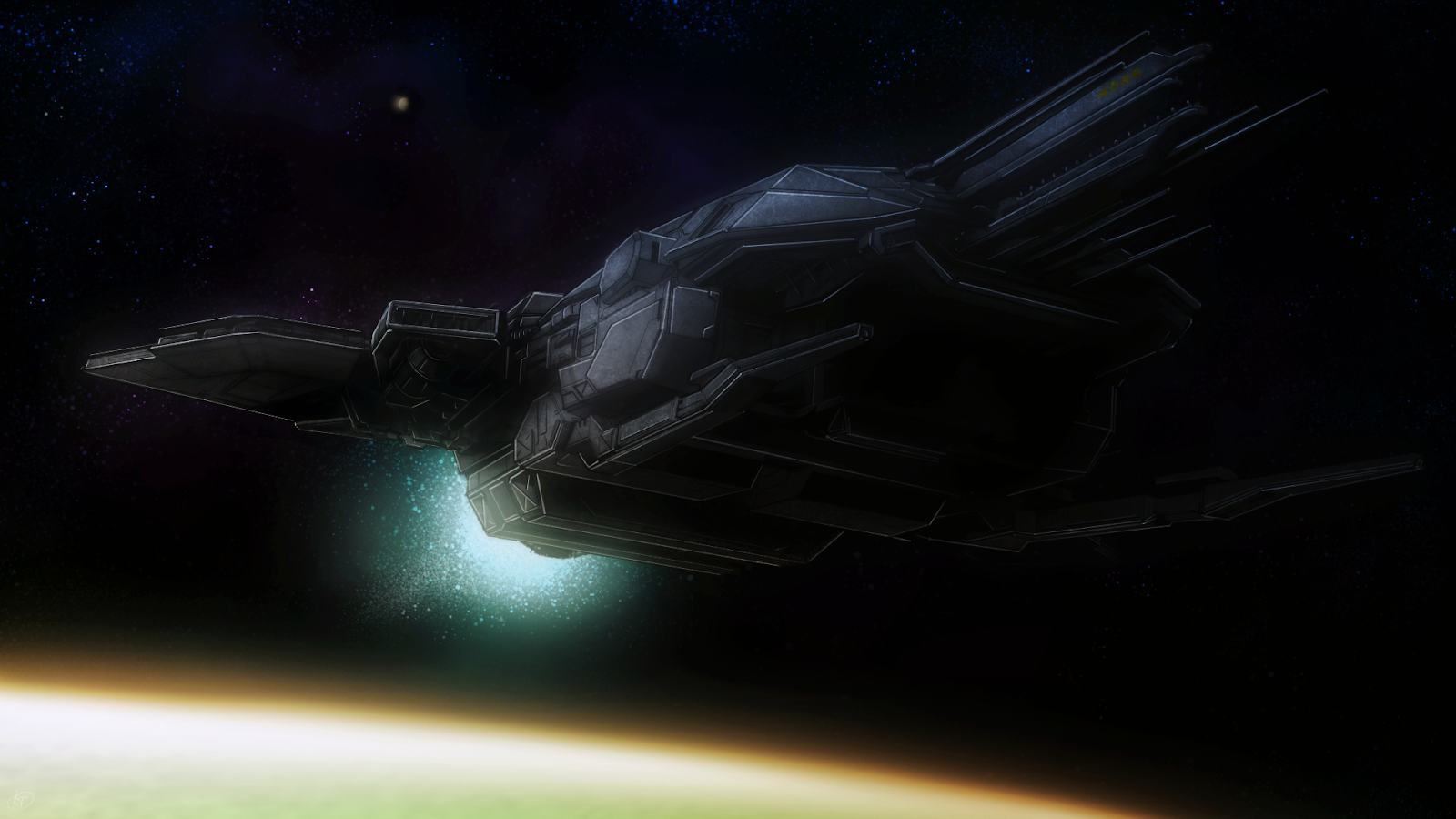
KEN_NORApromoShipFinal_Light.png

NORA is a sci-fi psychological thriller game featuring Captain Abigael Blake and her ragtag crew of smugglers on their way to complete the most important mission of their lives: travel deep into enemy space to retrieve a mysterious alien envoy. Along the way, Abigael must overcome old enemies, a contentious crew, and the threats of madness and mutiny in order to make it back alive. If players want to succeed, they must solve puzzles, explore the ship, and navigate the tempestuous relationships of the NORA’s crew. As captain, it’s up to the player to keep everything from falling apart. In the NORA’s current state, that’s easier said than done.


The NORA Act 1 Indiegogo campaign started Monday, March 23rd, 2015 and will continue for 30 days until April 21st, 2015. “We’re thrilled about launching our Indiegogo campaign,” says Kevin Gray, CEO, “Not only does our team deserve some much needed upgrades, but it would significantly shorten our development timeline.” Coincidentally, this crowdfunding campaign marks the second anniversary of a company and with successful funding they’ll be able to ship their debut title before 2016.

Click the link below to check out GravTech’s Indiegogo Campaign for NORA Act 1 and learn more about the game and the company.

Wednesday, March 18, 2015

Character Voice Exercises and You

One of the most challenging aspects of writing NORA, from the perspective of a writer and a narrative designer, is the fact that we’re looking at a closed environment with thirteen different characters, including the player character and the eponymous artificial intelligence. A ship needs a crew, after all, and even in the far future, these things still can’t pilot themselves with any sort of finesse.

That means that we have twelve men and women that the player can interact with. And because we’re trying to get the player to want to interact with these people, they have to be interesting enough to talk to and care about. More than anything, we want these characters to be memorable.


To that end, we've had to develop twelve characters who each have their own wants and needs. They have their own ideas. They have different backgrounds— they’re from different places across the galaxy, and they’re from a good range of socioeconomic situations, which means they’re all going to have different opinions and ideas. They’re all going to approach problems in distinct ways.

One of the ways we’re working to express that is in their voice. Not just how the actor reads the character, but in the character’s literary voice. How all the things about them shape the way they talk and how they react to other characters and situations. So we have to make sure they all don’t sound like the same person.

This is a common problem writers have when they’re first starting to develop the unique style that sets them apart. It’s difficult enough to figure out how you sound, let alone how make-believe people that exist only in your head sound.

One of the exercises that I have found helpful is to write out a character's personal history and some of the important aspects of their personality. Are they extroverted or introverted? What are their hobbies? Are they loud? Quiet? Funny? Thoughtful? Clever? Get it on paper (or a word processor, as the case may be), so it’s all in front of you.

Next, I make a list of things I want to figure out about the character. This is subjective, but I like to include some things such as:
Cadence: How quickly or slowly does the character talk? What is their diction like?
Vocabulary: What kind of words does the character use? Do they use a lot of slang? Are they well-read? Are there any personality traits that might affect that (An arrogant person might use demeaning language or show off their larger vocabulary, for example)?
Verbal Tics: Does the character have any verbal stopgaps (Um, er, uh), and how would their mental state affect that?


I find it’s also helpful to look at a character’s temperament or their thought process and how their language informs that. You could also look at how their language might change depending on who they talk to. You don’t talk to your professors the same way you talk to your friends, after all! Try and think about what you need to know about the character and extrapolate from there.

After all this is written down, I like to do a “dry run” and think up some monologues or quick lines of dialogue to see if I can write something that sounds unique to the character. It’s kind of fun to see how I can make sure all the things I just learned apply to their dialogue now.


The best thing to do is to make at least a few of these for different characters. While you go through them, keep in mind the other voices you’ve already developed. Once you’re done, you've got a bunch of people who all sound different from each other in natural ways.

These are exercises that have helped us while working on NORA. I recommend trying it out and seeing if it works for you. Hopefully, you’ll get a sense of the effort it takes to take thirteen people, place them aboard a ship, and make sure they all actually sound like individuals.

--
Annie Craton, Design Lead for NORA

Saturday, February 21, 2015

The Importance and Challenges of an Art Direction

A well defined art direction has multiple parts to it, including style, theme, color palette, etc. Having all these work together in a cohesive manner can really make the difference when trying to create an impacting and engaging visual experience. This is true for all forms of entertainment like movies, games, and even music.


So why is a solid art direction so pivotal to the game development process? Imagine an art team without a proper art direction to set the foundation for the project. You’d spend more time resolving issues then producing art! Each day would bring multiple revisions and artists arguing over who should change what so everything looks consistent. If these key aspects of the art, like character, clothing, or environmental style, aren’t figured out from the start you’ll either be drastically slowed down, playing catch up, or have a vastly inconsistent looking game. So obviously you can see the benefits of having a solid art direction and how doing so would help alleviate a lot of problems or delays during production.


Now for the challenging part: figuring out your art direction. It takes a lot of time and effort to really nail down your idea of the game on paper, especially if it’s going to have a really unique look. Just having a description doesn’t always cut it. Sometimes you need to find certain references or develop diverse concept art to help convey your style. This process is usually done during preproduction and does require a bit of research into what other people have done and what worked and what didn’t. Also if it is something difficult and never done before that makes it that much harder.


From my own experience on working on NORA we definitely ran into a lot of issues in the beginning when there was little to no art direction established. Once I became the art lead, my first goal was to figure this out and provide a proper vision to move forward on. This process was not necessarily an overnight thing and took some time to figure out but in the end it was worth it and we now a definitive vision and style that we are proud of and can continue to refine moving forward. We definitely can’t wait to show you this game and hope that you love the art style and direction as much as we do.

--

By Jared Frenzel, Art Lead for GravTech Games

Saturday, February 14, 2015

Find Your Focus

In the earliest stages of production, games are these gigantic bundles of ideas mashed together into something that vaguely resembles a complete concept. It starts with the grand, sweeping, basic as hell phrases like “space captain” or “insane diplomat” and somehow, by some insane alchemy, it becomes a tight, cohesive story. One you can show off to other people and have them say, “Oh! I understand that!"

Except it’s not alchemy.

It’s me.

I came aboard Gravtech at a fairly early stage in development. There were a lot of ideas floating around, but much of it wasn’t written down, or it existed in documents that were way too outdated to help. For my first few weeks, I felt a bit like an anthropologist trying to record a culture with a strong oral tradition. It just wasn’t easy to bring someone up to speed on the whole thing.

Credit

A lot of my work has been figuring out what worked about the ideas, what was outdated, what was recent, and how to refine the concepts that already existed. Since then, it’s been a steady refining process, fitting the game’s design and story to narrative structures and programmable functions (or flexing narrative and function to fit the game). And let me tell you what I’ve learned:

It’s all about narrowing your focus.

The most important thing you can do early on is look at your game concept and define what makes it yours. Strip away everything else that is non-essential and look at what you have left. What is the core of your story, your game, your design? What sets it apart from every other new thing out there?

See, there’s this phrase that floats around writing circles: “Every story’s already been told.” And it’s true. You can find analogues for most ideas somewhere in the history of storytelling. Once you realize that, it’s easy to feel discouraged.

But here’s the trick: You don’t have to make something nobody else has ever made before. You just have to tell the story in a way no one else has. And that’s easier than it sounds. Think about what you bring to the table that no one else does. Tell it your way, design it your way, because no one else has quite your perspective or your thoughts.

Take NORA, for instance (what I can tell you, anyway). There have been science fiction games, and there have been character-focused games. There have been psychological thriller games. But nobody else is going to tell our story quite the way we’re telling it.

That’s the heart of design. The thing we keep returning to over and over again when we need to refocus as designers. What are we saying, what are we doing, what are we designing that no one else will?

Once you have that, everything else is just an added bonus, something to decorate the core of your idea. You’ll always know what you’re working towards. And once you’re confident that your unique take shines through every part of your idea, you’ll know that your design is rock-solid.


Just narrow your focus and find your voice.

--
By Annie Craton, Design Lead for NORA